A Dialogue with Creative Maker Ankon Mitra
Folds, shapes and new perspectives
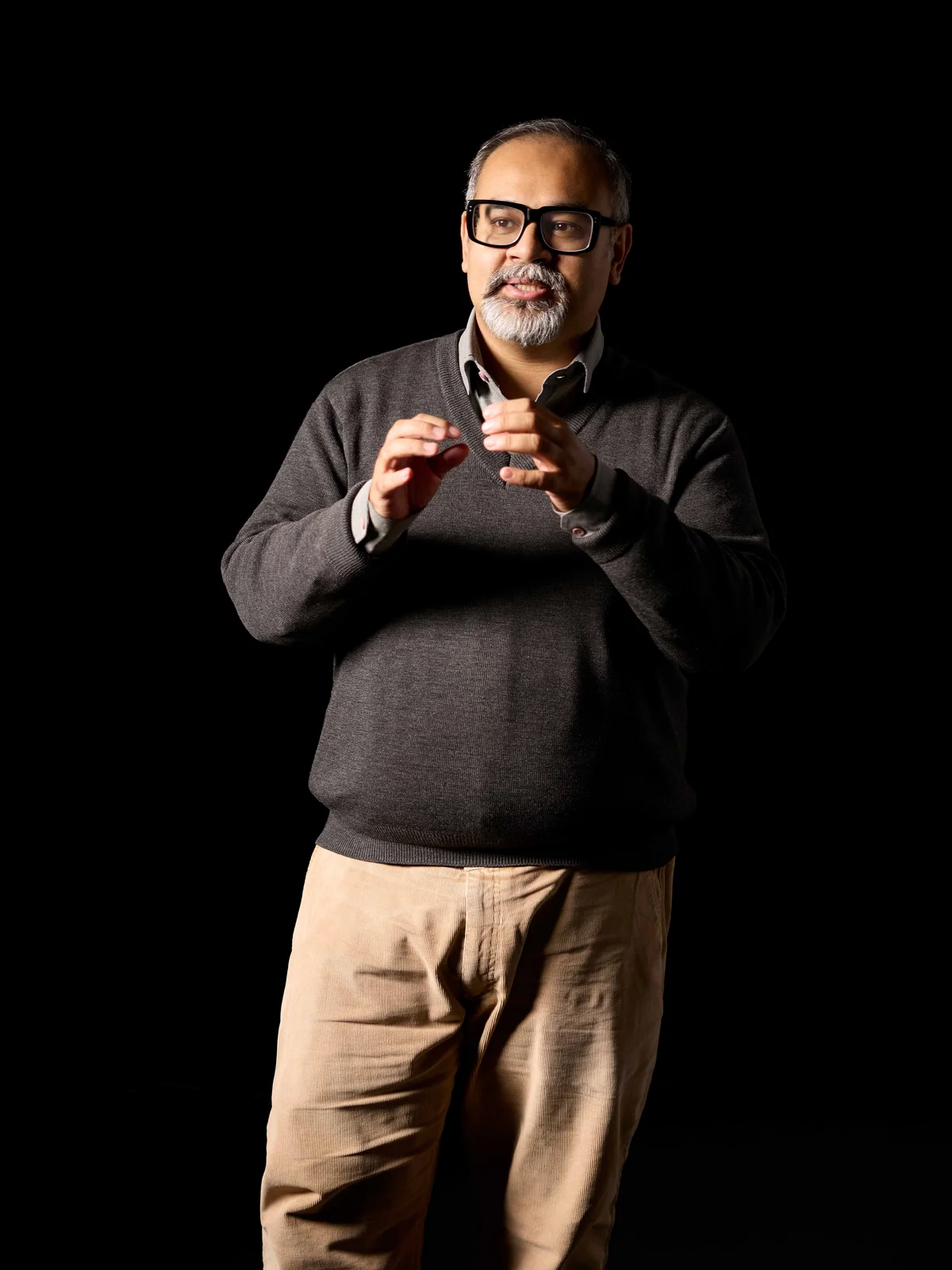
What makes a kitchen authentic? How do you choose the right texture or surface? Indian architect and sculptor Ankon Mitra is next125’s new Creative Maker and explains in an interview why a kitchen is a place for people to come together – today and in the future.
#1 Can you please introduce yourself?
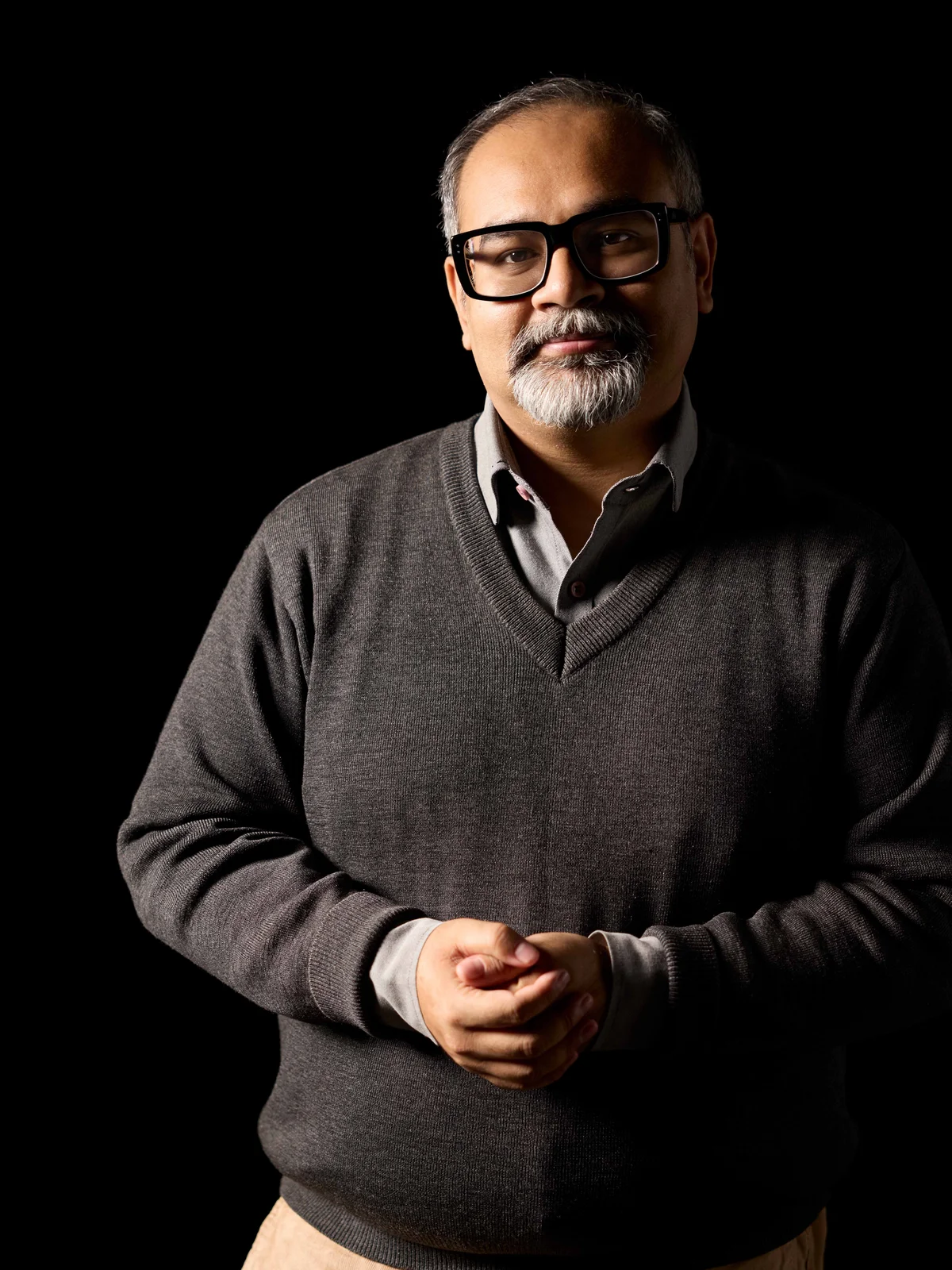
I’m Ankon Mitra. I’m an architect by training and I practice as a sculptor and origami artist. I’m based in New Delhi, India.
#2 Where do your ideas generally come from?
I’d say that I primarily get my ideas from my surrounding environment and Mother Nature. My practice of origami or paper folding came from a deep understanding of folds in nature and the reason for their existence at all. I consider how nature uses them and what their purpose is, then develop the ideas further. My designs come from a mixture of conversations, sketches and looking at the work of other masters. People who have shown us the way by trying something new and opening a door that we can now walk through to explore things further.
#3 What is your earliest childhood memory of being in the kitchen?
I was a latchkey child. My earliest memory is of trying to make an omelette. I had to climb up onto a little stool to reach the gas hob. I wasn’t allowed to use it but I switched it on anyway, poured some oil into a wok and cooked myself an egg with some onions and tomatoes. I then washed everything up, leaving the kitchen spick and span again. When my mother got home in the evening, she went into the kitchen then came back out and asked “Have you been cooking eggs?”. I replied: “Yes, I cooked eggs.” I thought she was going to scold me, but then a little smile simply appeared on her face. That’s probably one of the memories that has stuck with me the most from my childhood in the kitchen.
#4 What sounds do you associate with the word ‘home’?
I’d predominantly say the sounds that come from the kitchen. In Indian kitchens, we have a device called a pressure cooker, which whistles in the morning. And then there’s the sound of rotis (Indian flatbread) being made. Another sound is the banging of the karchi – the ladle or large spoon you use to stir vegetables in a wok or handi – hitting the sides. I think my favourite sounds are those of my mother making meals in the morning and packing my lunch box.
#5 You work a lot with materials. How do you choose the right texture or surface for a project?
The project chooses the material itself. All you have to do is match it to the project brief and develop a sense of which type of material is best for the particular brief, the context and the meaning of the project.
#6 How do you decide whether a material is suitable for the project?
If it’s a project where, for instance, we’re looking at strength, but strength that comes through a process of transformation, then I might choose something like concrete. Concrete begins as a very powdery, weak material, but through the addition of water and the chemical transformation, it becomes something extremely strong and hard-wearing. In that case, concrete fits the narrative of the project. In other words, you have to think a bit more deeply about what the material should express, and the answer will reveal itself naturally.
#7 What do you pay particular attention to when combining materials?
It depends on the desired end outcome. Sometimes, you might want an atmosphere of softness. If so, you tend to choose textiles and materials which render a soft feel upon the whole space – carpets and the like. At other times, you may need warmth. Then, you’re looking at wood, for instance, or warm-coloured stones. You may desire reflection or something very polished. In that case, you’re after steel, mirrors or highly reflective metallic surfaces.
In a sense, I think this is all somewhat logical; that you naturally gravitate towards a material which intrinsically has the desired behaviour or property.
#8 Why should people experience space and materials in real life rather than just digitally?
We’re physical beings. We don’t just have the well-known five senses, but also a sixth sense. We’re not yet virtual creatures. We inhabit space. We have an energy around us which we don’t see, and that interacts with physical space. When we come into contact with another person, we interact with that person’s energy.
Given all of this, it’s very important – the physicality and materiality of things, the energy of this material, the way you touch, feel and sense something, the way something speaks to you and the sense you get from it. These are all things that still belong to the physical world. This means that we definitely need to physically interact with materials and spaces to give them their full meaning.
#9 As an architect and artist, which rule do you most like to break and why?
One thing I’ve seen which is always very subjective is that there are no hard and fast rules in the field of architecture, but there are guide values. Take ergonomics for example, the study of what people find comfortable. People come in a whole range of shapes and sizes, right? I’m short. Other people are tall. So, if a tall person and a short person sit on the same chair, they will each have a different experience of it. What we therefore try to do is adapt the chair to be comfortable for both the short person and the tall person. When you look at this idea of a range, you can instantly see that there is no hard and fast rule on how exactly a chair must be.
#10 How can you tell that an artwork has character?
I think it’s similar to meeting someone who stays in your mind long after the encounter. You meet them briefly, they leave, but something about them lingers. If an artwork leaves that kind of impression – if you’re no longer in front of it but it keeps returning to your thoughts – then it has character.
#11 How would you describe an authentic kitchen?
For me personally, an authentic kitchen is a place in the home where food is prepared. The experience offered by the room must give us the same emotional, mental and spiritual enrichment as the food itself. This is essential to nourish our body. As such, the experience of making the food must also be fulfilling.
#12 What will the future of cooking look like?
To be honest, I think the future is looking increasingly bleak as with all the fast food options and ready meals, irregular meal times and people ordering food and not having the time to cook their own meals, things are going to reach a cliff point. And when they do, we’ll have to decide whether to jump off or to step back from the edge.
From that point onwards, I think things will start getting better. There are already movements like the slow food movement, plus people are wanting to go back to choosing fresh ingredients, making their own meals, eating simpler dishes and taking the time to cook and then savouring eating.
#12.5 My perfect kitchen…?
...is where my family and I can reconnect. We might not have connected for a while because everyone has been busy working. The kitchen becomes the place where we are reunited, make a meal together, and reconnect while we cook. We then sit down and enjoy sharing a meal.
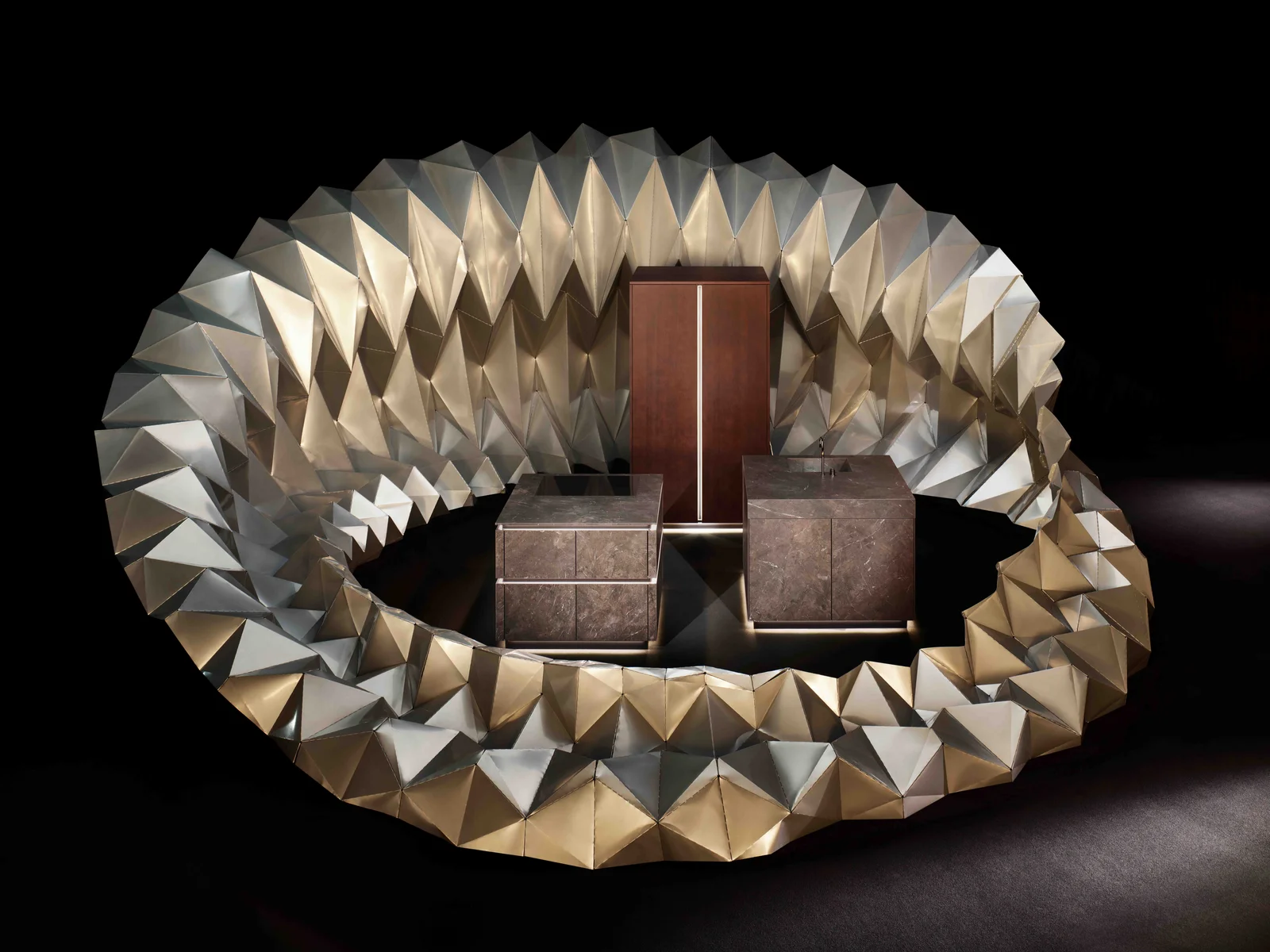
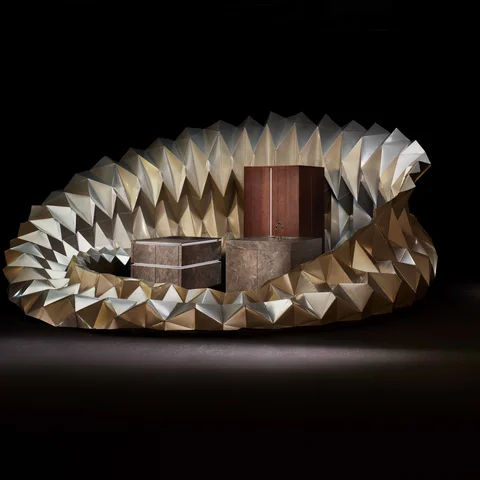
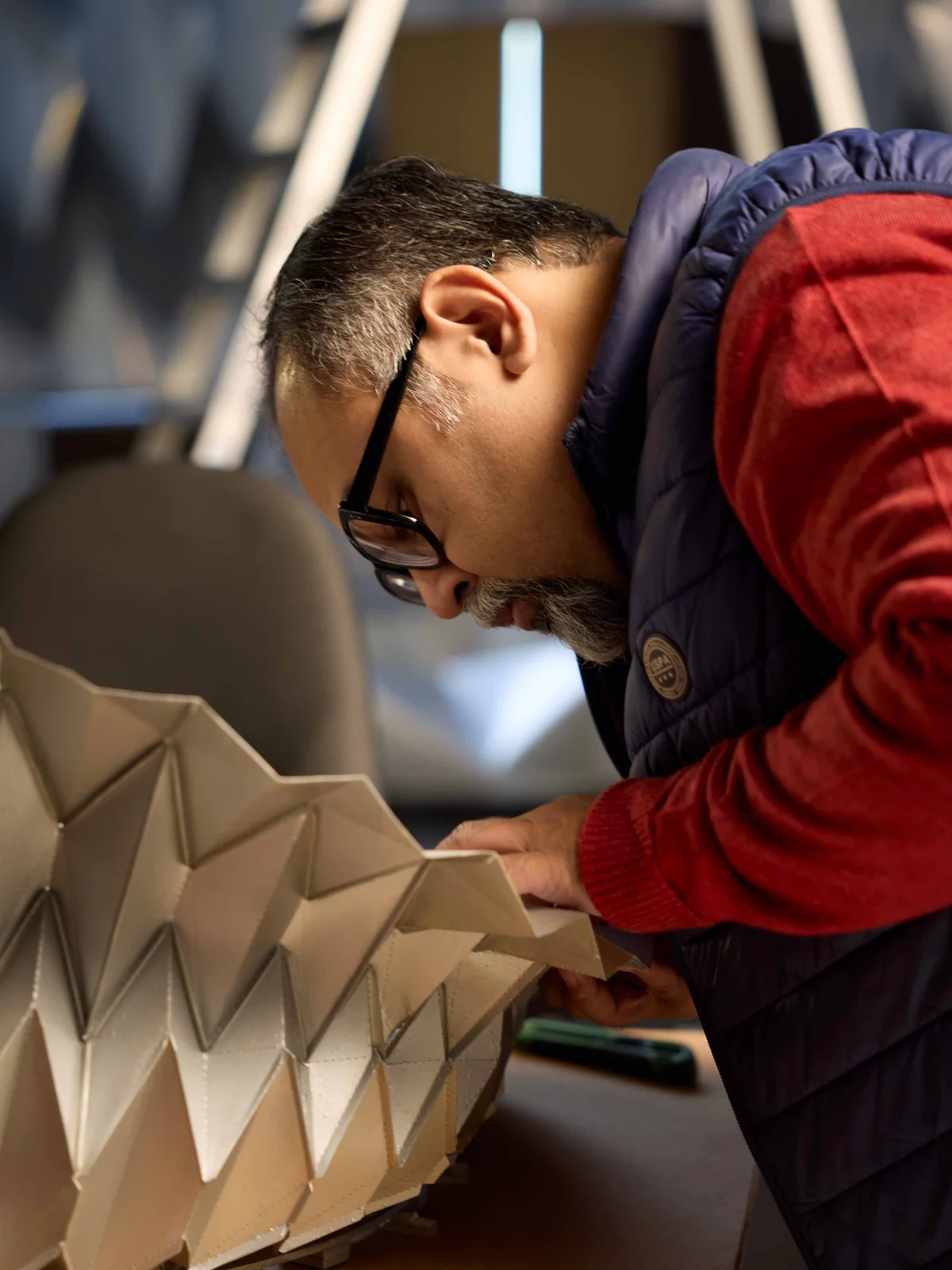
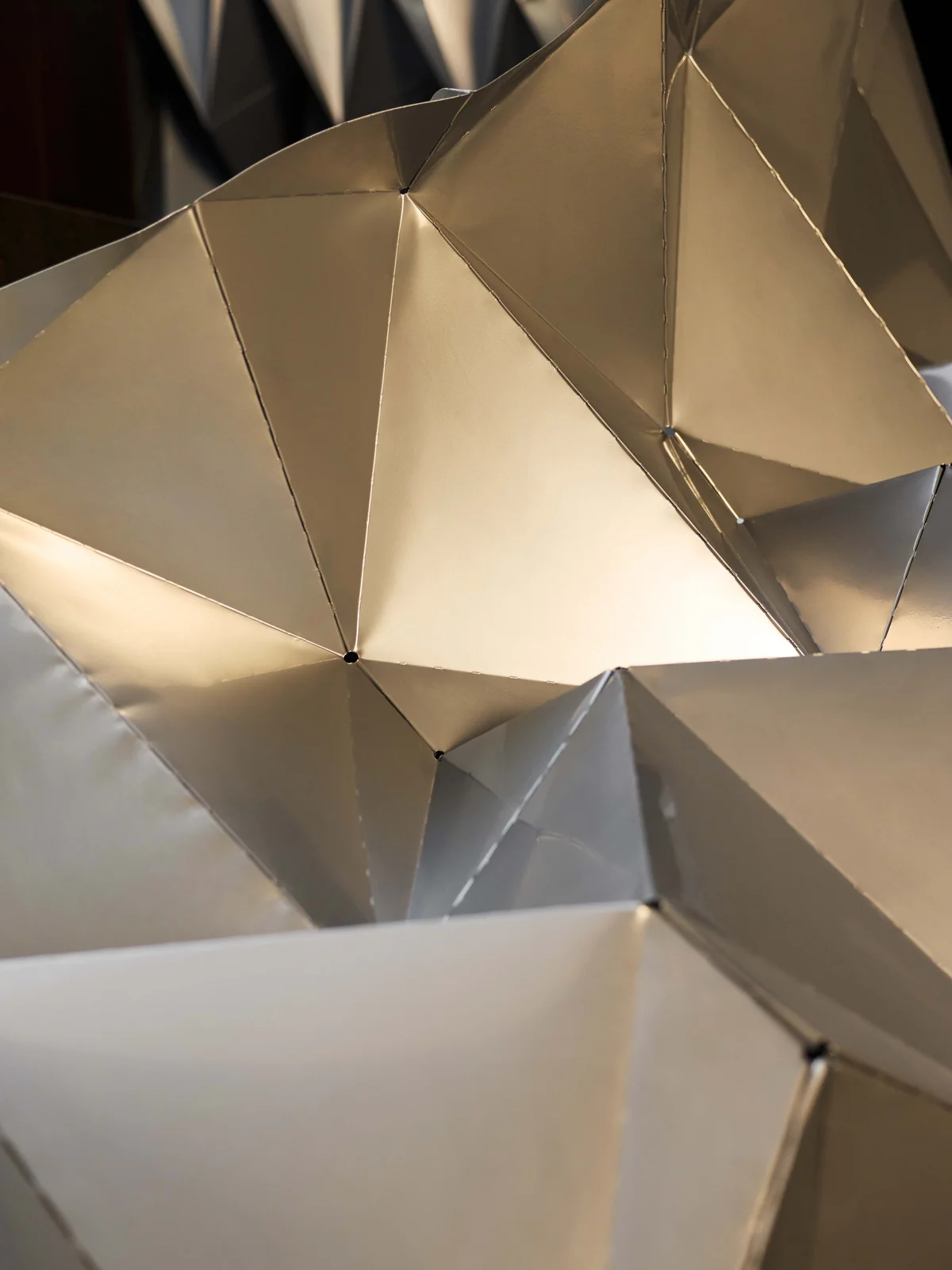
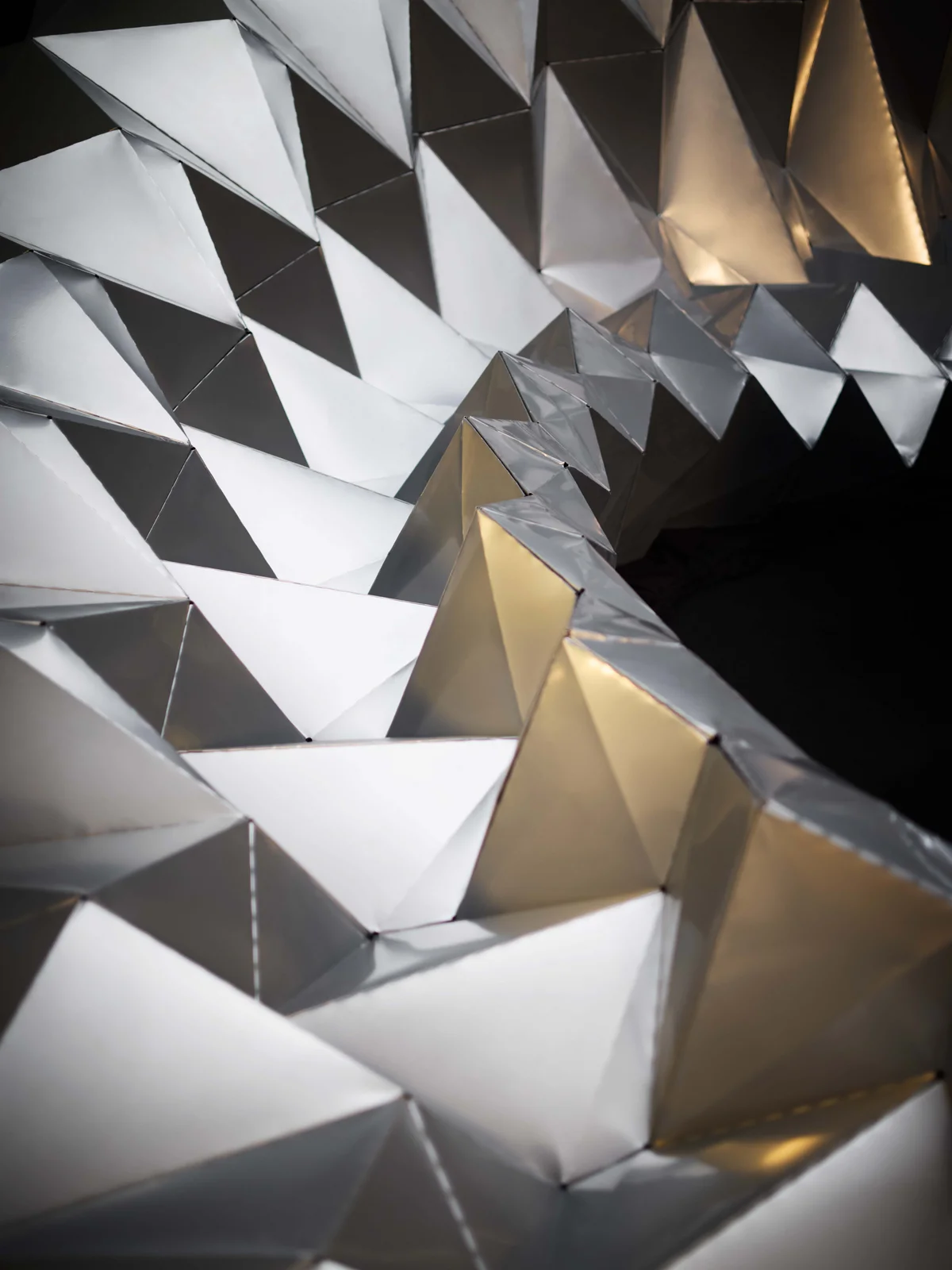
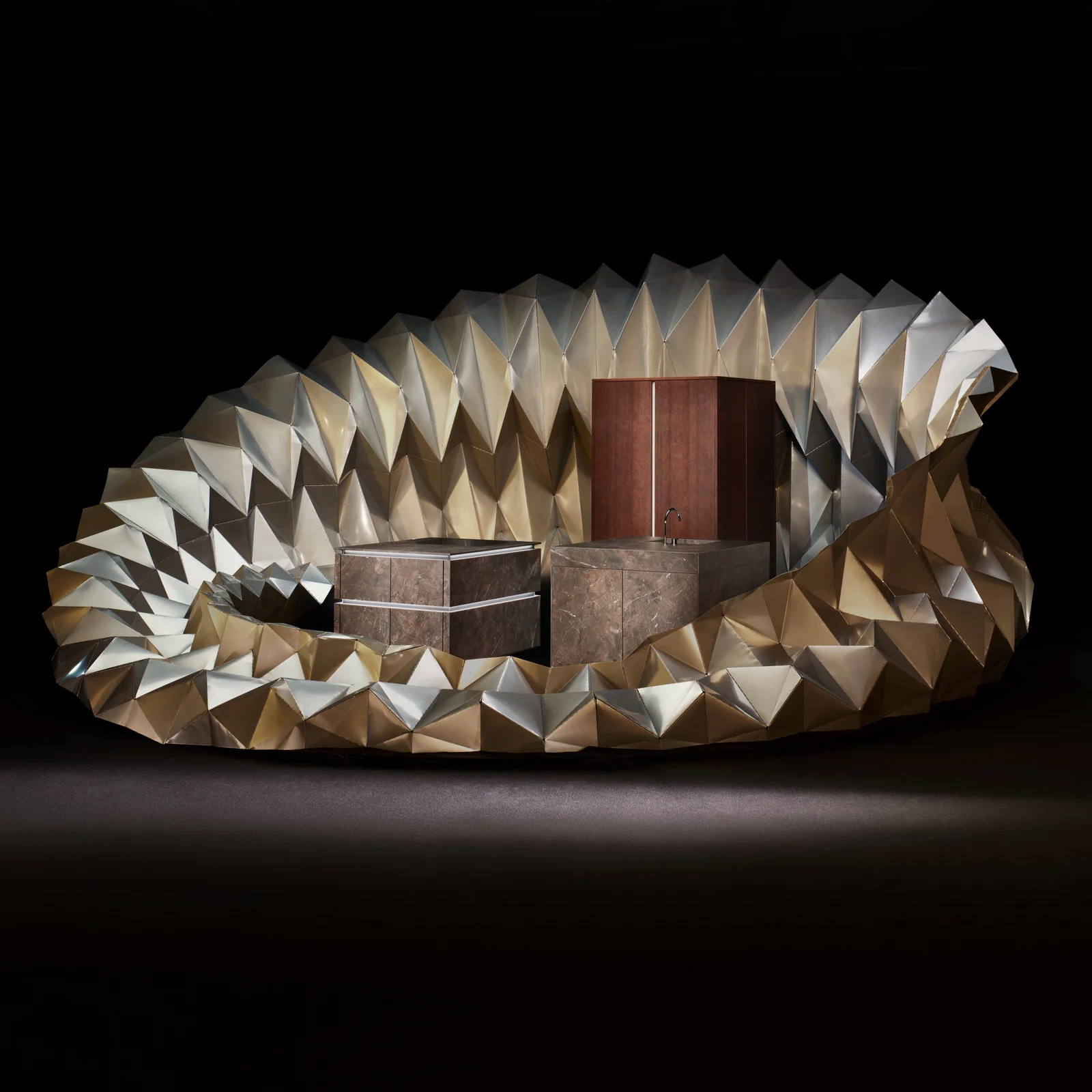
Ankon Mitra developed the installation UN:FOLD for next125. Folded aluminium has been used to create a round, three-dimensional frame that plays on different viewing angles and perspectives. The dynamic circular construction provides a stage for the minimalist next125 kitchen at the heart of the installation.